Invisalign in Louisville CO | Is It Right for You?

If you searched Invisalign to get here, the real question is usually simpler: can your teeth still be straightened, and can a clear tray get you there? For most adults, yes. Age is rarely the deciding factor. What matters more is the health of your teeth and gums, how much movement is actually needed, and what you want your bite to feel like when you are done. Clear aligners can do more than most people expect, though they are not the right tool for every situation.
This guide covers the full picture of adult teeth straightening, not just one brand. Invisalign is the most recognized name out there, but it is one option among several, and the right fit depends on your specific situation. We will walk through how alignment is evaluated, what your options actually are, how treatment works month by month, and how straightening fits into a bigger dental plan when other work is involved.
If you would rather just talk it through, call us at (303) 666-5080.
Your Questions, in Order
- Why adult teeth shift, crowd, and wear down, including after teenage braces
- The signs your bite is worth a closer look, even if your only concern is a photo
- How alignment is evaluated with scans, photos, X-rays, and a bite check
- How clear aligners work, from trays to attachments to refinements
- Who is a good candidate for clear aligners, and who should see a specialist instead
- When straightening is the first step in a larger implant, crown, or veneer plan
- What treatment feels like month by month, and how long it takes
- Retainers and how to protect your results over time
- What drives cost in Colorado, plus insurance, FSA/HSA, and financing
- What to expect at a consultation in Louisville
Why Your Smile Looks Different Than It Did Ten Years Ago
Teeth are not fixed in place. They sit in bone, held by a ligament, and they respond to pressure throughout your entire life. That is why a smile that looked fine at 25 can look crowded at 45, and why so many adults find themselves back in this conversation.
- Natural forward drift. Teeth slowly migrate forward over decades. Lower front teeth usually show it first as a small overlap that gets a little more noticeable each year.
- Relapse after braces. If you wore braces as a teenager and stopped wearing the retainer, your teeth have been gradually returning to their original positions ever since. This is the most common reason adults ask about clear aligners.
- Tooth loss and shifting. When a tooth is removed and not replaced, the neighboring teeth lean into the gap and the tooth above or below drifts to fill it. One missing molar can shift an entire arch, which is why we talk through dental implants early.
- Wear and grinding. Years of clenching flatten the biting surfaces. As teeth shorten, the bite shifts slightly and the front teeth absorb forces they were not built to handle. Significant wear sometimes calls for full mouth reconstruction rather than alignment alone.
- Longstanding bite issues. Deep bites, open bites, crossbites, and crowding tend to get worse over time rather than stay the same.
- Gum and bone changes. If gum disease has reduced the bone support around a tooth, that tooth becomes easier to push out of position. Flaring front teeth are often the first visible sign.
Figuring out which of these applies to you is where we start. Once we know the cause, we can build a plan that actually addresses it.
These Are the Signals Most People Brush Off
A lot of people come in because they do not like how their smile looks in photos. That is a completely valid reason. But alignment problems often show up in other ways too, and these are the ones that tend to cause real damage over time.
- Front teeth that chip at the edges, or look shorter than they used to
- Uneven wear, where one or two teeth are flattened while the rest look untouched
- Areas that trap food no matter how carefully you floss, or spots where your hygienist keeps finding bleeding
- Jaw soreness in the morning, headaches at the temples, or muscles that feel tired after chewing
- Teeth that feel like they are shifting, or a retainer that no longer fits like it used to
- Gum recession, where a tooth looks longer on one side because the gum has pulled back from too much pressure
- Dental work that keeps failing, including loose crowns, fractured fillings, or a repaired edge that breaks again
- Speech or lip posture that shifted as the front teeth gradually moved forward
Repeated work on the same tooth is the signal most people overlook. If it keeps breaking, the force behind it is usually the problem, not the filling or crown itself.
Before We Plan Anything, We Look at Everything
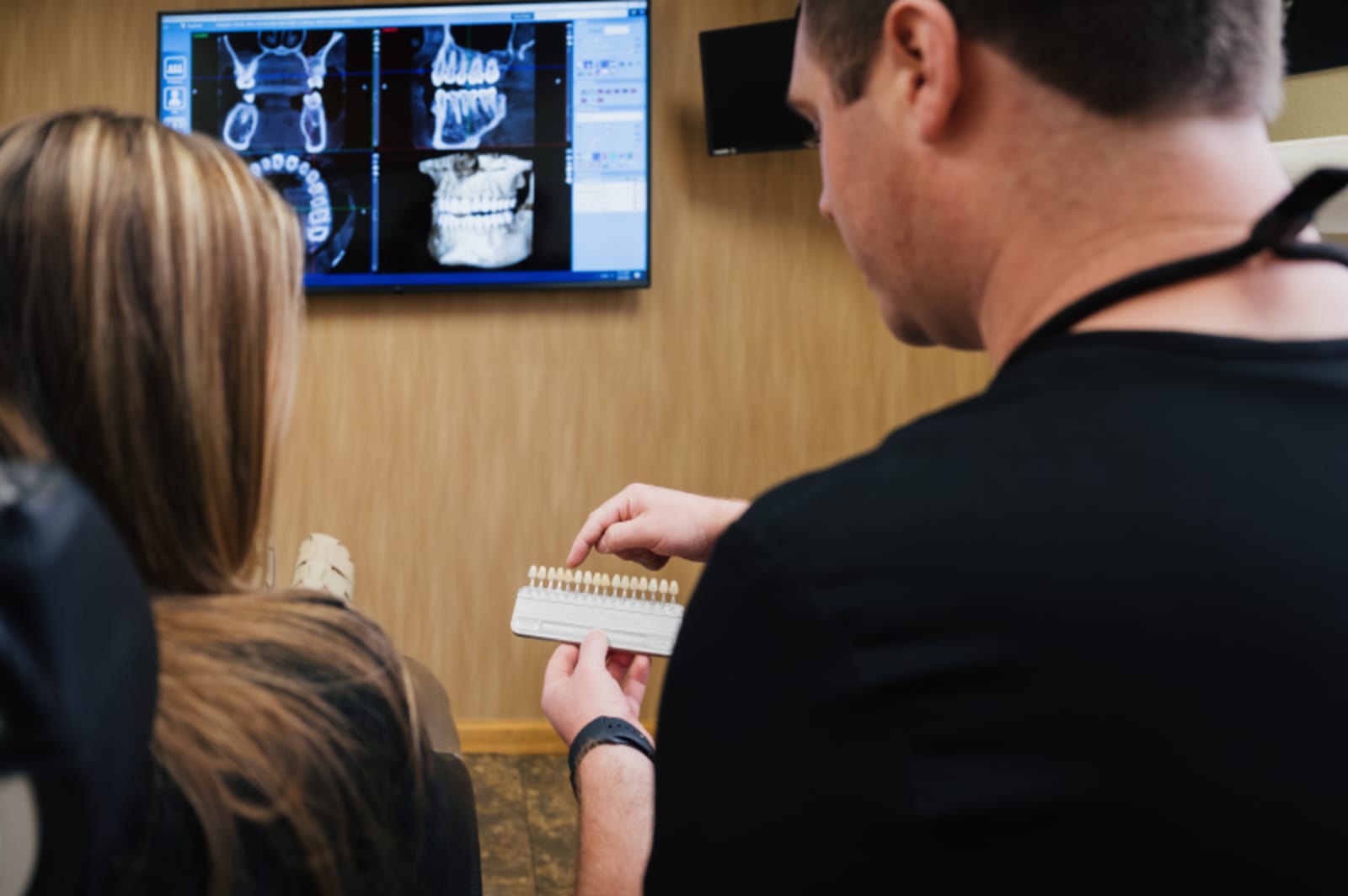
A good alignment evaluation looks at far more than whether your front teeth are straight. Here is what a thorough exam involves and what each piece tells us.
Digital Scanning
A small wand moves along your teeth and maps their shape and position in a few minutes, with no trays of impression material. The result is a 3D model that shows exactly how much crowding, spacing, or rotation each tooth has.
Photographs
A full photo series records your teeth, gums, lips, and face together. Tooth position only tells part of the story without your face in the picture, including how much tooth shows when you speak, where the center line sits, and how the smile follows the lower lip. Photos are also how we measure progress later.
X-Rays and 3D Imaging
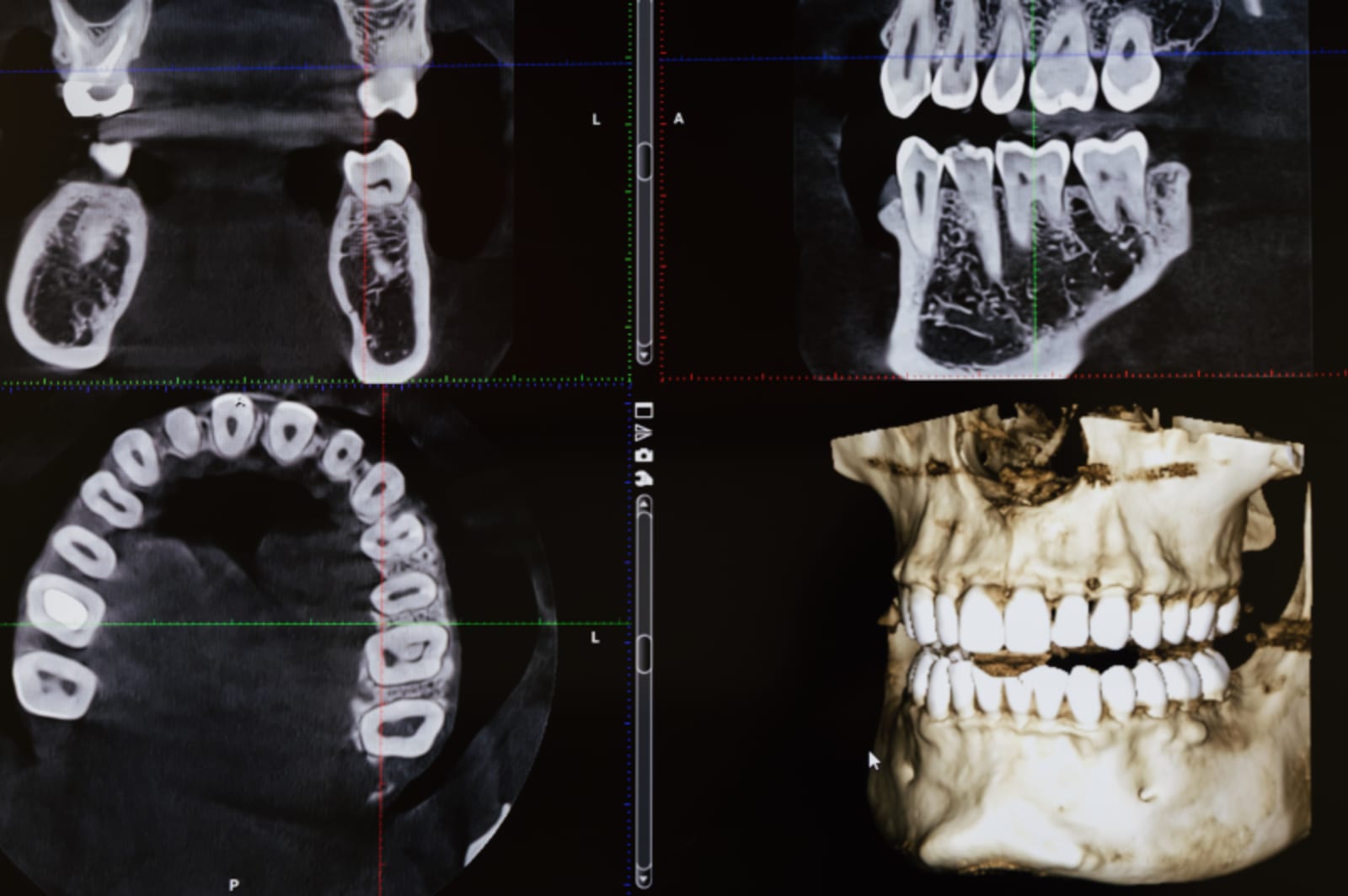
Standard X-rays show root length, bone levels, decay, and any existing root canal or restorative work. We also have 3D imaging in-house, which shows bone thickness in detail. A tooth can only move as far as the surrounding bone allows, and imaging is how we spot any limitations before treatment starts.
How Your Bite Fits Together
We check how your teeth meet when you close, how they shift as your jaw moves side to side and forward, and whether your jaw joints and muscles feel comfortable. A bite can look straight and still put the wrong pressure on the wrong teeth.
Gum Health and Existing Dental Work
The condition of your gums, bone support, and any existing crowns or fillings all shape the plan. Active gum disease or untreated decay needs to be taken care of before any teeth move.
All of this together is what points us toward the right path for your specific situation.
Invisalign, SureSmile, and How the Process Works
Invisalign is the brand that put clear aligners on the map, but the underlying process is the same across every reputable system, including SureSmile, which is what we use in Louisville. The brand affects the software and manufacturing, not how your teeth actually move.
- A Digital Plan Comes First. Your scan maps the teeth from where they are to where they need to end up, broken into small, manageable steps.
- Each Tray Is Slightly Different From the Last. Worn for roughly one to two weeks, a tray applies gentle, steady pressure to specific teeth. That small difference between tray and tooth is what nudges them into place.
- Attachments Make Certain Movements Possible. Small tooth-colored dots bonded to specific teeth give the tray something to grip, so it can rotate or reposition a tooth instead of sliding over it. They come off at the end.
- Sometimes a Little Space Needs to Be Created. A tiny amount of enamel is smoothed between crowded teeth to make just enough room to align them without removing a tooth.
- Wear Time Is What Makes It Work. 20 to 22 hours a day. Out to eat, out for anything other than water, out to brush and floss, back in.
- Check-Ins Confirm the Teeth Are Moving as Planned. If a tooth lags behind, the sequence gets adjusted rather than pushed through.
- Refinements Are Normal, Not a Failure. Most cases finish with a short extra series to fine-tune the result.
Same Goal, Different Tools and How Your Options Stack Up
Visibility
Invisalign and SureSmile look nearly identical in your mouth. Both use thin clear trays with small tooth-colored dots on certain teeth, and most people around you will not notice either one. Braces range from visible to completely hidden, depending on the type.
Precision and Case Range
Both are FDA-cleared systems built around digital scans and guided by your dentist every step of the way. For more complex movements, like large rotations or significant bite shifts, braces can apply force in ways a removable tray sometimes cannot match.
Compliance and Daily Life
Aligners come out to eat and make flossing easy, but they only work when you wear them. If keeping up with consistent wear is going to be a real challenge, braces may actually get you there faster since you do not have to think about it.
Cost
Aligners and braces land in a similar range for comparable cases. Case complexity predicts the price far better than which brand name is on the box.
Why We Use SureSmile
SureSmile connects directly to the digital tools we already use: 3D scanning, digital treatment planning, 3D printing, and in-house milling. When orthodontics is part of a bigger plan involving implants or restorative work, that integration lets us design the final result first and move the teeth to support it.
Clear Aligners, Braces, or Neither: Where Do You Fit?
Strong Candidates for Clear Aligners
- Mild to moderate crowding or spacing
- Teeth that shifted after teenage braces, which is often a shorter and simpler case
- Slight overbites, crossbites, and minor bite adjustments
- Targeted movements that set up a planned implant, crown, or veneer
- Adults who want a discreet option and can commit to wearing the trays consistently
Better Served by Braces or a Specialist
- Jaw mismatches where the upper and lower jaws do not line up correctly
- Teeth that need significant rotation or vertical repositioning
- Teeth that have not fully come in and need to be guided into position
- Cases where a tooth needs to be removed and the gap closed afterward
- Anyone who knows consistent wear is going to be a real challenge
- Children and teens, whose treatment is planned around the fact that they are still growing
What Delays Starting Altogether
- Active gum disease or bone loss that has not been treated yet
- Untreated cavities or an infected tooth that needs to be resolved first
- Heavy smoking or uncontrolled health conditions that affect healing
- Jaw pain or clenching habits worth addressing before any teeth start moving
None of these is a permanent barrier. They are steps to take care of first, not reasons to give up. When you come in, we look at the full picture and tell you exactly where things stand before anything gets started.
Why Moving Teeth First Makes Everything Else Easier
For many adults, orthodontics is not the end goal. It is the step that makes everything else work better.
- Before an implant. When teeth drift into a gap over time, there may not be enough room to place an implant that looks natural and fits well. Moving the neighboring teeth back first creates the space needed to do it right.
- Before veneers or crowns. A tooth that sits too far forward requires more reshaping to fit a veneer. Moving it back first means less of the natural tooth has to be removed.
- Before rebuilding worn teeth. Years of grinding can shorten teeth and close down the bite. Repositioning the teeth first opens up the space needed to rebuild them properly.
- To protect what you have. Crowding that traps plaque, or a tooth taking on more pressure than it should, can often be helped with small movements. Sometimes a few millimeters is the whole treatment.
Because we handle orthodontics, implants, and restorative work under one roof, we can plan the final result first and map out exactly where each tooth needs to be to get there.
From First Tray to Finished Smile
- The First Week. Your first trays go in, attachments are placed if your plan calls for them, and your teeth may feel tight and tender for a couple of days. The soreness comes from pressure, not sharp pain, and it responds well to over-the-counter pain relief. Speech feels slightly off for the first few days, mostly on s-sounds, and your tongue adjusts quickly.
- Months One Through Three. A routine sets in. New tray, mild tightness for a day or two, then nothing. Swapping trays at bedtime makes the adjustment easier. Good habits tend to form quickly: a case in your bag, a toothbrush at work, water as your drink of choice. Visible change usually starts showing in this window.
- The Middle Stretch. Check-ins happen periodically rather than every few weeks, which is one real advantage over braces. We confirm the teeth are moving as planned, check gum health, and make adjustments if a tooth needs a little more time.
- Refinement and Finishing. Most cases get a new scan near the end and a short additional series to fine-tune the result. Attachments come off, the surfaces get polished, and we check how your bite feels in everyday use. If straightening was step one toward a larger goal, this is when we revisit cosmetic options like whitening or bonding on a foundation that is already aligned.
- Typical Timelines. Teeth that shifted after old braces can often be corrected in a matter of months. Moderate comprehensive cases commonly run around a year. Complex cases, or orthodontics planned alongside implant or restorative work, can take longer because healing and sequencing have their own pace. You will have a clear timeline before you start.
- Hygiene and Habits During Treatment.
- Brush, or at least rinse, before putting trays back in. Sealing sugar against your enamel for hours is how people finish with straight teeth and still end up with a cavity.
- Stick to water while the trays are in. Coffee stains them and hot drinks can warp them.
- Always keep the case with you. Trays wrapped in a napkin have a way of ending up in the trash.
- Clean trays with cool water and a soft brush. Hot water and toothpaste can both cause damage.
How to Keep Your Teeth Where You Put Them
A retainer is not an optional step. It is what protects everything you just went through, because teeth will shift again if nothing is holding them in place.
Removable Retainers
Clear retainers look just like your aligners and are the most common choice after treatment. You will typically wear yours full-time at first, then just at night going forward. They are easy to replace, and they work as long as you actually wear them.
Fixed Retainers
A fixed retainer is a thin wire bonded behind your front teeth, usually on the lower arch, where shifting tends to show up first. Nothing to remember to put in, but you do need to floss carefully underneath it and have it checked at your regular visits. It is worth knowing that many adults who come in asking about aligners stopped wearing their retainer years ago, and that is exactly how they ended up back here.
Practical Retainer Care
- Keep it in its case, not a pocket or a napkin (and out of reach of pets).
- Rinse after wearing and clean with cool water and a soft brush.
- If it suddenly feels tight, wear it more, not less, and let us know.
- Replace it when it cracks or warps rather than skipping nights and letting things drift.
We print replacement retainers in-house, so a lost or cracked retainer does not have to turn into weeks of your teeth shifting. Just bring it up at your next cleaning and we will take care of it.
What You Can Expect to Pay, and How to Make It Work
Pricing varies widely across Colorado, and every case is different enough that a single number would not mean much. The biggest factor is how much work your teeth actually need. Relieving minor crowding is a much simpler job than correcting a bite and repositioning teeth before other dental work. The price shifts depending on how many trays are required, whether you are treating one arch or both, and whether refinements and retainers are bundled into the total or charged separately.
Some dental plans include an orthodontic benefit, though adult coverage is not guaranteed and the benefit may apply only to children on the plan. We are currently transitioning out of our Delta Dental Premier network participation over the next seven months, but we can still review whatever coverage you have. Orthodontic treatment is also typically an eligible FSA or HSA expense. For larger plans that combine orthodontics with other dental work, phasing treatment over time can make the investment more manageable without affecting the quality of the outcome. We offer in-office financing to help with that.
When comparing quotes from different offices, it helps to look past the bottom-line number. Ask how the case was evaluated, whether 3D imaging and a bite analysis were part of it, who monitors your progress, and whether refinements and retainers are included. Two estimates that look similar on paper can reflect very different levels of planning.
What We Actually Do at Your First Visit
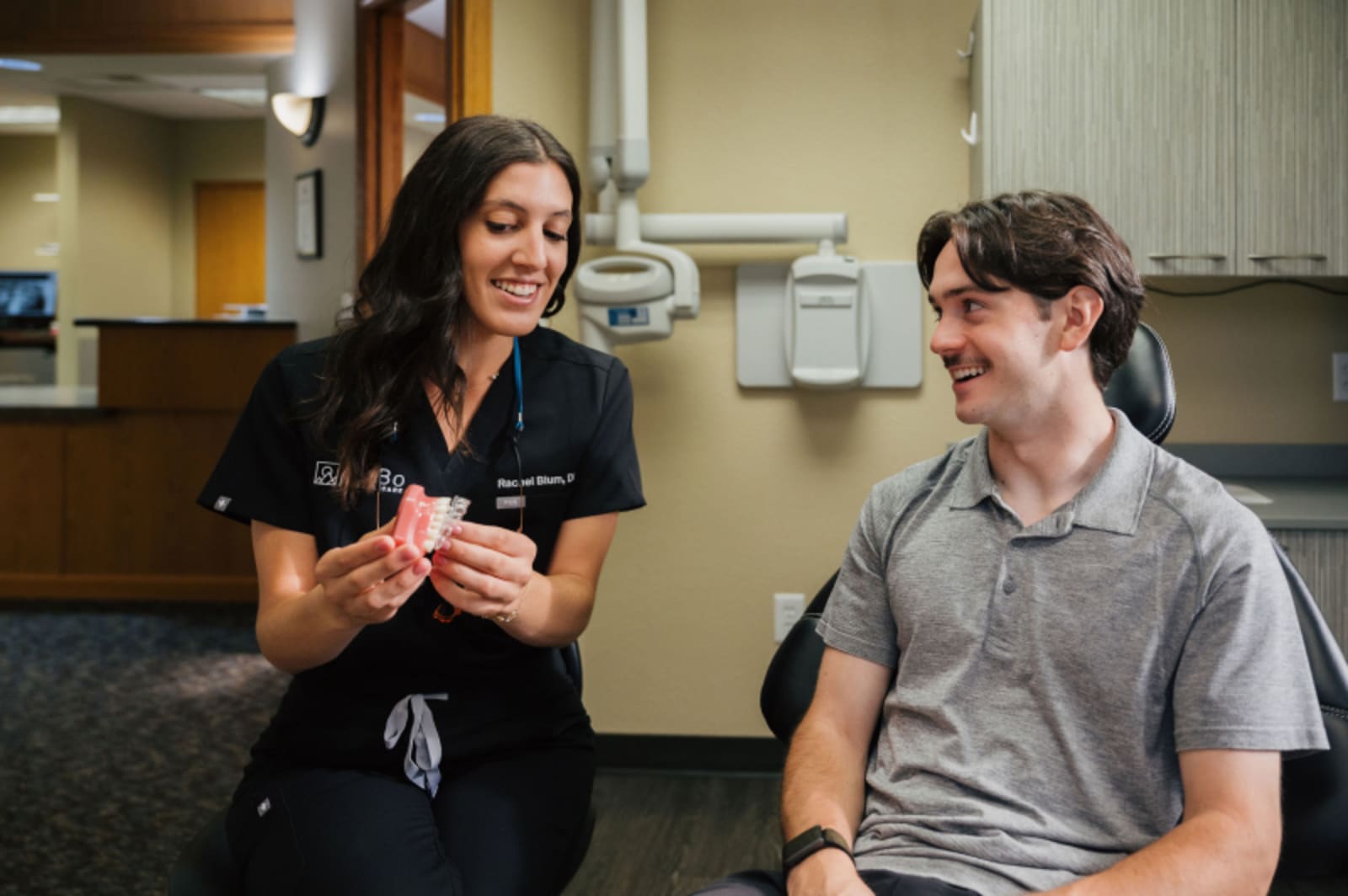
Your first visit is a conversation, not a sales appointment. We use digital tools to get a clear picture of your mouth and then walk you through exactly what we find and what we think makes sense.
- Digital scan: No goopy impression trays. A small wand captures a 3D picture of your teeth and bite in just a few minutes.
- Photographs: We look at your teeth, gums, lips, and face together, because tooth position only makes sense in the context of your whole smile.
- X-rays and 3D imaging: When helpful, we take a 3D X-ray that shows bone detail, root length, and anything that could affect how your teeth move.
- Bite and gum check: We look at how your teeth come together, where crowding or spacing exists, how your gums and bone are holding up, and how any existing dental work is doing.
- Honest next steps: We walk you through how the teeth would move, a realistic timeline, and a clear cost picture before you commit to anything. If a specialist is the better fit, or if something needs to be handled first, we will tell you that too.
You will leave with a clear picture of where things stand, what the options are, and what comes next if you want to move forward.
Start With a Question, Leave With a Plan
If this has been on your mind for a while, a quick conversation will do more than another hour of reading. SoBo Dental Care is rooted in Louisville, and we are happy to walk you through what makes sense for your situation before you commit to anything.
Call us at (303) 666-5080 to set up a consultation.
We can’t wait to meet you
Call 303-666-5080 or request an appointment online to set up your first visit. We’ll be in touch soon.